Silicon platform
ESP32-S3 platform
ESP32-S3 is a dual-core MCU for connected devices, HMIs, and edge workloads. Boards share the silicon capabilities, while exposed GPIO, Flash/PSRAM, USB wiring, and onboard peripherals remain board-specific.
Board implementation
An ultra-compact ESP32-S3 development board with Wi-Fi and Bluetooth
NoLogo Technology · Development Board
- Processor
- Dual-core Xtensa LX7 · up to 240 MHz
- On-chip memory
- 512 KB SRAM · 384 KB ROM
- Wireless
- 2.4 GHz Wi-Fi 4 · Bluetooth 5 LE
- Native USB
- USB 2.0 OTG · USB Serial/JTAG
Chip capabilities
Flexible GPIO Matrix
Most digital peripheral signals can be routed through the GPIO Matrix, so SPI, I2C, UART, I2S, and PWM are not tied to one fixed header assignment.
Vector instructions
The LX7 cores include vector instructions that accelerate signal processing, wake-word, imaging, and lightweight machine-learning workloads.
Native USB device support
Integrated USB OTG and USB Serial/JTAG support flashing, debugging, and custom HID or CDC-class devices.
Analog and touch peripherals
The chip provides ADC, touch sensing, and timers; usable channels depend on the package and the GPIO actually exposed by a board.
Board features
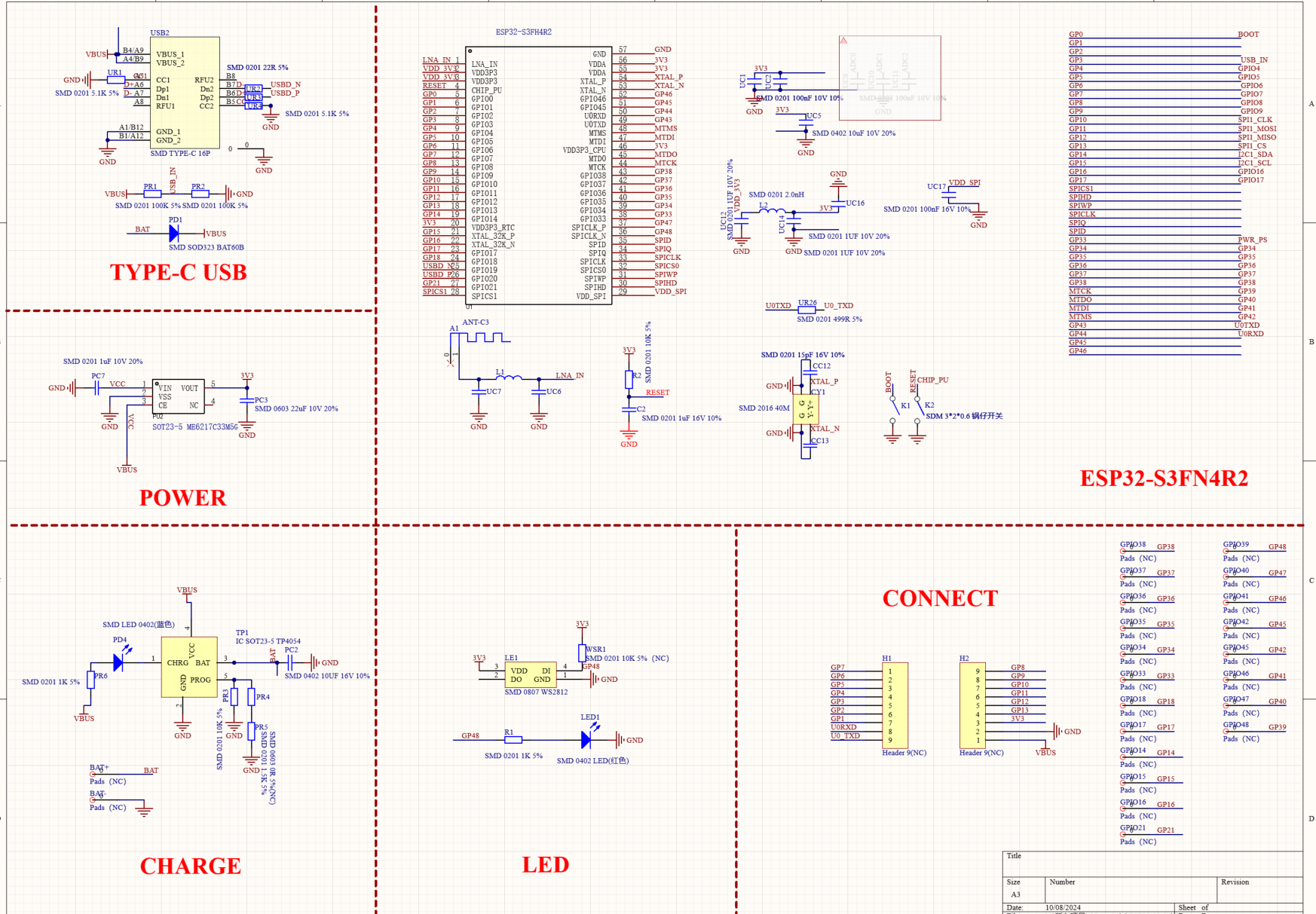
- USB-C uses the chip's native GPIO19 D- / GPIO20 D+ connection for USB OTG and USB Serial/JTAG; these signals are not exposed on the side headers
- Onboard BOOT and RESET buttons
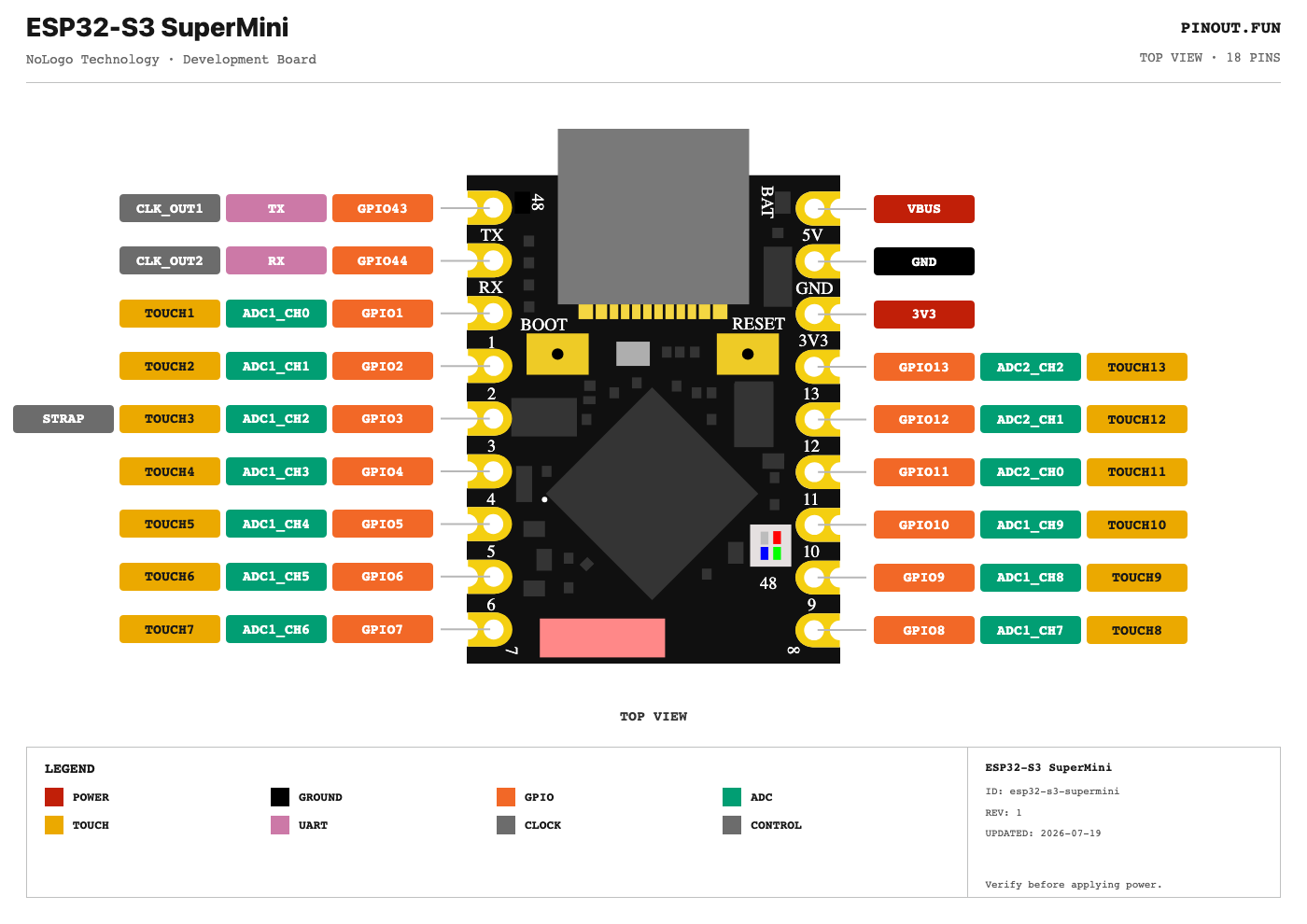
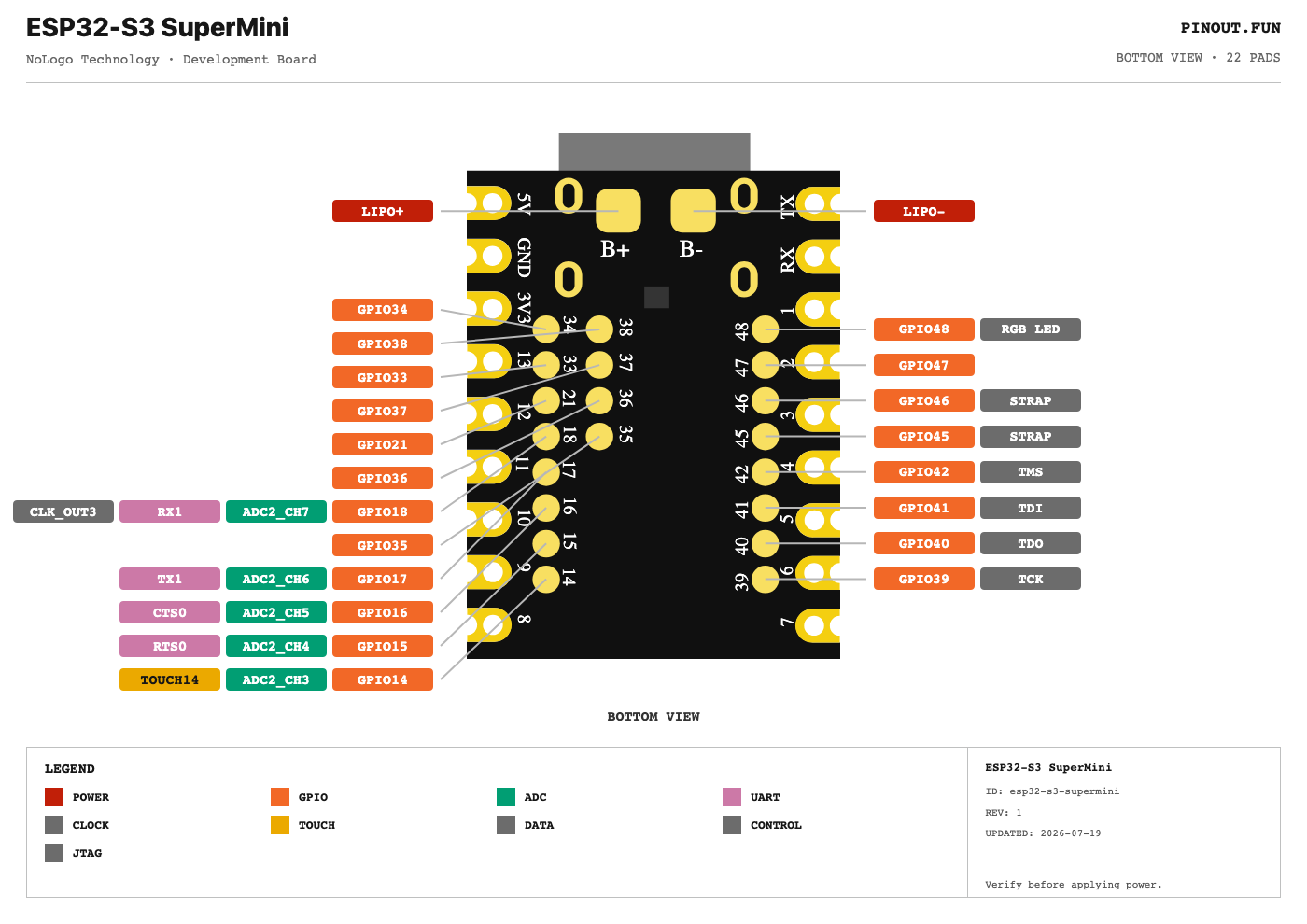
- Mixed castellated and through-hole pads for breadboard or stamp-style assembly
- GPIO43/GPIO44 expose the default UART0 TX/RX pair
Downloads